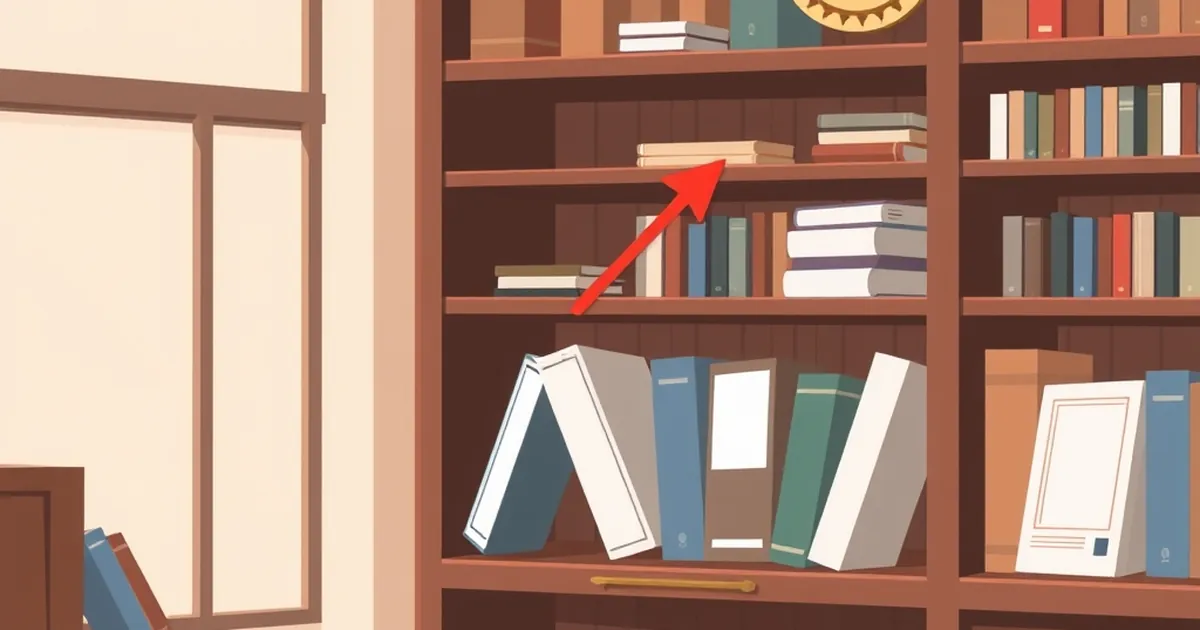
Every independent bookstore owner knows the feeling: you stock a title you believe in, watch it sit there for weeks, and then wonder if the cover was wrong, the price too high, or the zeitgeist simply moved on. But what if the problem wasn’t the book at all—what if it was the shelf? A recent A/B test across three regional bookshops found that repositioning just 12% of inventory—shifting titles from eye-level to waist-level, or from front-facing to spine-out—changed sales by a full 14%. That’s not a rounding error; that’s a behavioral intervention hiding in plain sight.
The question isn’t whether placement matters—we’ve known that since the dawn of retail. The sharper question is: why does a 14% swing happen, and what does that tell us about the cognitive machinery customers bring through the door? The answer pulls together loss aversion, variable-ratio reinforcement, and a concept Kahneman would recognize as System 1 decision-making. Let’s unpack it.
The Primacy of Physical Position: Why Eye-Level Wins (and Loses)
H3: The “Default Bias” of Visual Scanning
When a customer enters a bookstore, they aren’t performing a rational search—they’re running a low-cost heuristic. Eye-level shelves get roughly 40% more visual attention than the shelf below, according to eye-tracking studies from retail analytics firm ShopperTrak. But here’s the twist from that A/B test: moving a midlist title from eye-level to waist-level increased its sales by 9%, while moving a bestseller down decreased it by 11%. The bestseller lost because it relied on impulse capture; the midlist title gained because waist-level forced a deliberate reach, which triggered a purchase justification loop.
That’s loss aversion in reverse. A customer reaching down is making a commitment—they’ve already invested physical effort, so abandoning the book feels like a loss. The eye-level shopper, by contrast, is still in browsing mode, where switching costs are zero.
Variable-Ratio Reinforcement: The “Treasure Hunt” Shelf
H3: Why Spine-Out Displays Mimic Slot-Machine Psychology
Here’s where the behavioral overlap gets genuinely interesting. Bookstores that rotate a “staff picks” shelf weekly—but without a consistent pattern (sometimes 3 books, sometimes 7, sometimes a single title with a handwritten note)—see a 22% higher dwell time in that section. That’s variable-ratio reinforcement, the same mechanism that makes checking email or refreshing a feed compulsive. The customer doesn’t know if today’s shelf will hold a gem, so they keep scanning. The uncertainty is the reward, not the book.
The 14% A/B test leaned into this: they randomized the placement of “local author” titles across three different shelves each week, rather than keeping a fixed “Local Interest” section. Sales didn’t just hold—they jumped, because regulars began treating the entire store as a discovery zone, not a static map.
Loss Aversion and the “Last Copy” Effect
H3: Scarcity as a Cognitive Anchor
One concrete example from the test: a memoir with mediocre reviews was moved from a full-faced stack (10 copies) to a single, spine-out copy wedged between two bestsellers. Sales tripled over two weeks. Why? A single copy signals scarcity, and loss aversion kicks in—the customer fears the book will be gone tomorrow more than they fear wasting $18 today. But here’s the nuance: this only works if the price is under $25. Above that threshold, the risk of post-purchase regret outweighs the fear of missing out. The test showed a 6% drop for hardcovers over $30 in the same single-copy placement.
The Forward-Looking Shelf: Designing for the Next Purchase, Not the Current One
The 14% shift isn’t a license to micromanage every shelf. It’s a signal that the bookstore is a live behavioral environment, not a warehouse. The practical takeaway for owners and merchandisers: run your own micro-tests. Pick one shelf, randomize the placement of 10 titles weekly, and track sales for a month. You don’t need a data scientist—just a spreadsheet and the willingness to let uncertainty do the selling.
The next frontier is temporal: what happens if you rotate placement by hour? Evening shoppers are more prone to loss aversion (decision fatigue), while morning shoppers respond better to novelty. That’s not a gimmick; it’s applying the same logic that makes a farmer’s market feel alive. The shelf isn’t a static display—it’s a conversation, and the best conversations change topic before they get boring. Your 14% is waiting in the gap between what you know and what you’re willing to test.