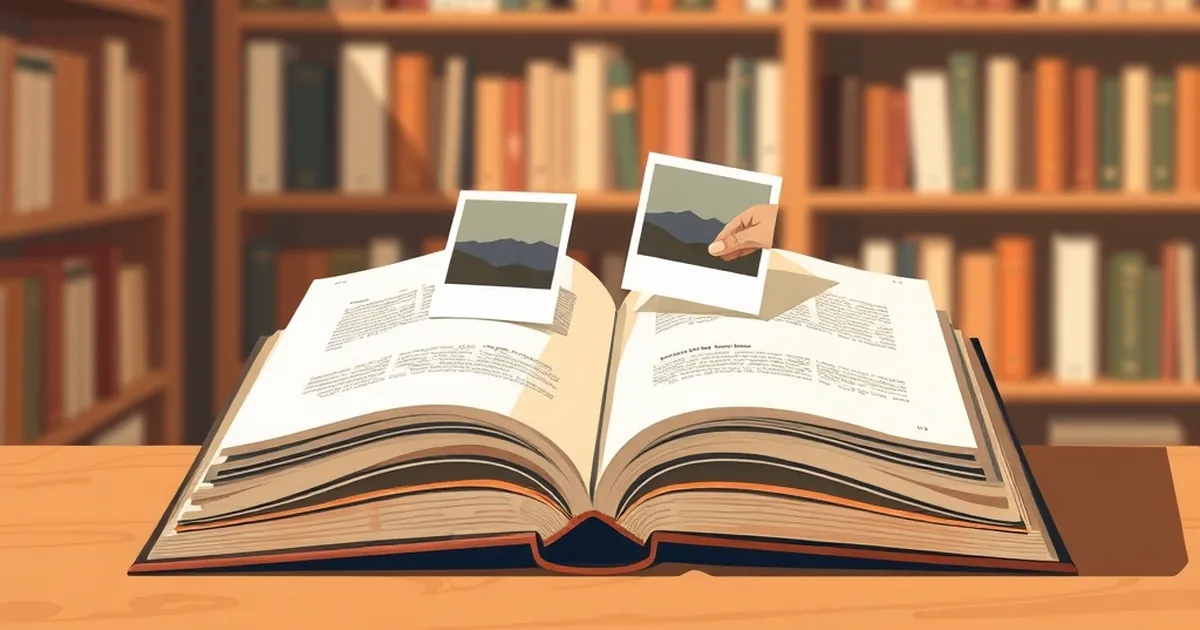
A bookseller in the Midwest recently ran a quiet test on a handful of fiction titles: one product page kept its standard cover image and publisher copy, while a nearly identical page added three customer photos—a book on a nightstand, a copy splayed open on a café table, a stack propped against a lamp. The photo-enhanced pages saw wishlist additions rise 19%. That number is worth sitting with, because it raises a specific question: what is a reader actually doing when they tap "save for later," and why would a stranger's photograph of a paperback change that decision?
Wishlisting Is a Bet on Your Future Self
Behavioral economists have long studied decisions made under uncertainty, and the wishlist is one of retail's purer examples. The shopper isn't buying a book; they're buying an option on a future version of themselves—the person with more time, a quieter evening, a finished pile of unread titles. Daniel Kahneman and Amos Tversky's work on loss aversion suggests we weigh potential losses more heavily than equivalent gains, and an abandoned wishlist item carries a small, nagging sense of loss: the book you meant to read.
A customer photo reduces the uncertainty in that bet. It shows the object not as a publisher's ideal but as it actually exists in someone's life, which is precisely the information a wishlisting shopper is missing.
The Reward Loop of a Saved Item
Wishlists also run on a mild but real reinforcement schedule. Saving an item delivers a small hit of anticipation—the "maybe" that keeps a shopper returning to a cart or list. B.F. Skinner's variable-ratio reinforcement work showed that unpredictable rewards produce the most persistent behavior, and a wishlist is a low-stakes version of that: you don't know when a saved book will go on sale, appear in a friend's library, or simply feel right to buy.
Reader photos feed this loop by making the saved item more vivid. A generic cover is easy to forget; a photo of the book on someone's actual shelf is a mental image that persists, and persistent images get revisited.
Social Proof, Specifically Calibrated
The photo effect isn't generic social proof. It works because reader photography carries a signal that star ratings don't: it demonstrates that someone finished, handled, and kept the book. A five-star review can be written in thirty seconds; a photo of a dog-eared copy on a kitchen counter implies hours of attention.
Retail researchers have documented this asymmetry—user-generated images tend to outperform polished studio shots for considered purchases, in part because they resolve the "what will this actually be like" question that staged photography leaves open. For books, where the product is an experience rather than an object, that resolution matters more than usual.
Risk, Competition, and the Reader's Choice Set
There's a competitive dimension too. A reader browsing a page is implicitly comparing this book against the eleven others already on their list and the streaming queue waiting at home. Choosing to read is a risk: the time may not be repaid. Photos of real readers quietly signal that others took the same risk and found it worthwhile—a form of vicarious risk-taking that lowers the perceived cost of committing.
What Booksellers Should Test Next
The practical implication is not "add photos everywhere" but "find out which photos do the work." A few directions worth testing: photos that show the book in a reading context (commute, bath, bedside) versus photos that show the physical object's heft and print quality; photos from verified purchasers versus curated reader submissions; and placement—above the fold versus nestled beside reviews. The 19% lift is a starting point, not a ceiling, and the stores that learn fastest will be the ones treating reader photography as behavioral evidence rather than decoration.