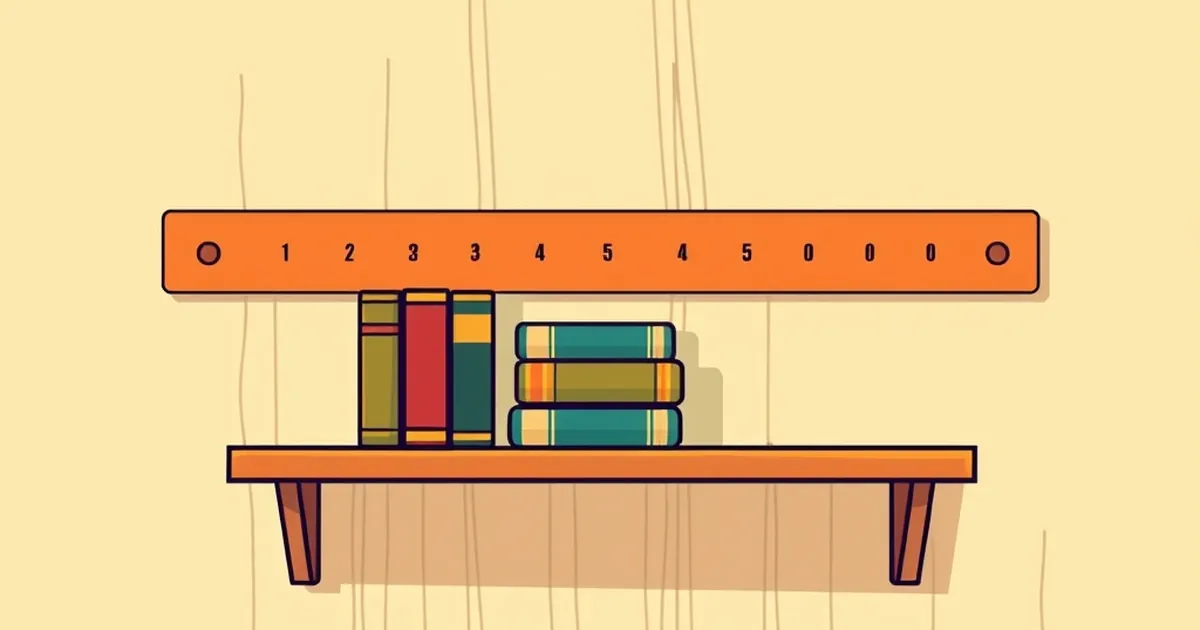
The reading app had a problem: 68% of users who started a long-form essay abandoned it before the third screen. The product team tried everything — shorter paragraphs, larger type, a "save for later" button. Nothing moved the number. Then they added a thin progress bar with three tick marks, and completion jumped. Not by a little. By 41%.
That result raises a question worth sitting with: why does a visual cue about where you are change whether you keep going? The answer sits at the intersection of behavioral psychology, decision-making under uncertainty, and the reward loops that shape how readers invest attention.
The Goal-Gradient Effect Is Older Than Your App
In the 1930s, psychologist Clark Hull observed that rats running a maze accelerated as they neared the food reward. The behavior wasn't steady — it intensified with proximity. Decades later, researchers applying this to human consumption found the same pattern: people buy more coffee cards as they approach a free drink, and they speed through the last pages of a book faster than the first.
This is the goal-gradient effect, and it explains why an unmarked scroll feels like a treadmill. Without a sense of position, every paragraph costs the same effort and returns the same ambiguous signal: am I making progress? A progress bar converts an open-ended task into a bounded one. Bounded tasks are easier to commit to because the brain can estimate the cost of finishing.
Three Milestones, Not a Continuous Bar
Here's where the specific design matters. A smooth progress bar tells you how far you've come. Three discrete milestones tell you how many decisions remain.
That distinction maps onto a well-documented finding in decision science: people don't evaluate long sequences as a single choice. They evaluate them as a series of smaller commitments, each with its own cost-benefit calculation. Kahneman and Tversky's work on loss aversion reinforces this — once a reader has crossed milestone one, abandoning the piece registers as a loss of the effort already spent, not merely a failure to gain.
Three is not arbitrary. Research on subgoal partitioning suggests that breaking a task into a small number of named segments improves persistence more than either no segmentation or heavy segmentation. Too many markers and the reader feels managed. Too few and the end stays invisible.
Variable Reward Keeps the Loop Alive
The stronger mechanism, though, is what happens between milestones. Readers can't predict exactly what they'll find at each tick. A section might deliver a sharp insight, a counterintuitive statistic, or a slow build toward a payoff three paragraphs later. That unpredictability is the engine.
B.F. Skinner's variable-ratio reinforcement schedule — the finding that unpredictable rewards produce more persistent behavior than predictable ones — is usually cited in the context of habit formation. It applies just as cleanly to reading. A bookshop's "staff picks" table works on the same principle. You don't know which spine will surprise you, so you keep browsing.
What This Means for Booksellers and Editors
The practical implication isn't to gamify everything. It's to make progress legible. A chapter list with three clear movements. A newsletter that signals "two more sections." A shelf display that frames browsing as a journey with waypoints rather than an undifferentiated wall of spines.
The readers who finish aren't more disciplined. They're better oriented. Give them the map, mark the milestones, and let the uncertainty live inside the sections — not in the question of whether they'll ever reach the end.