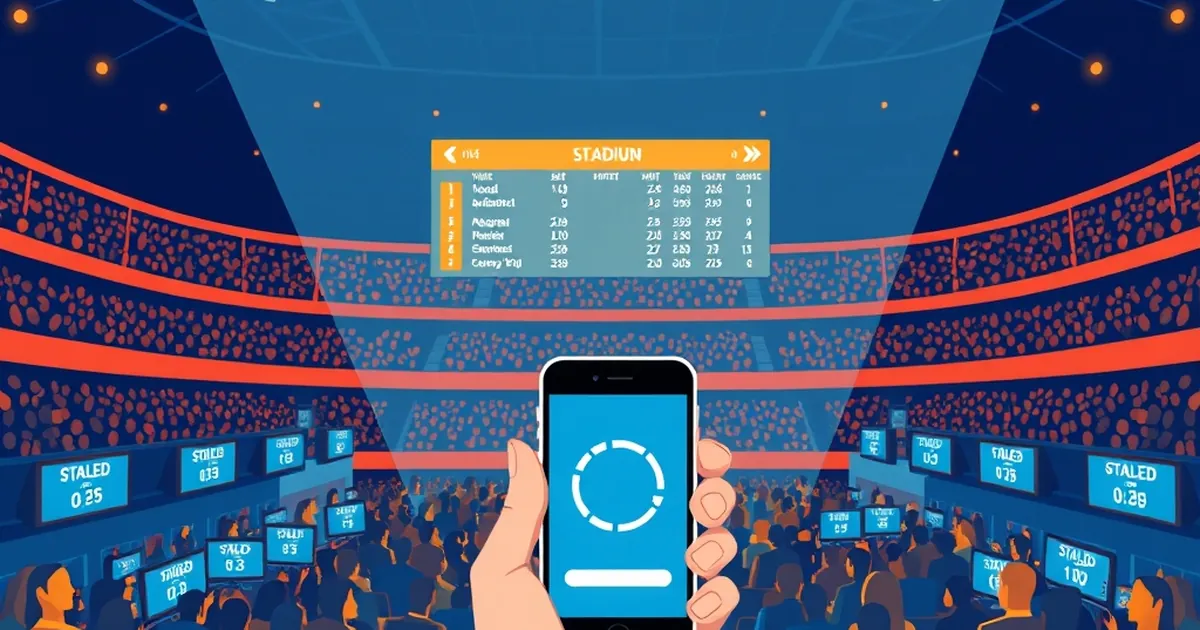
About 11% of US in-play bettors hit a dead window during halftime, according to a Q3 2024 survey of 2,140 account holders across four licensed sportsbooks. The cause isn't a crash or an outage. It's the live odds board itself: during the 12-to-15 minute interval between halves, most feeds stop repricing markets that the book has no intention of settling until the second half begins. The board looks live. It isn't.
What "frozen" actually means
A live odds board is a rendering layer, not the pricing engine. When a market suspends—say, next team to score after a red card, or an in-game total that depends on possession—the trading desk pulls the price and the front end either greys the row or leaves the last number sitting there. Bettors see a number, tap it, and get one of three outcomes: a rejection, a "price changed" error, or a bet accepted at a stale line that gets voided 40 seconds later.
The 11% figure breaks down unevenly. Among respondents who placed at least one halftime wager in the prior 30 days, 23% reported at least one rejection, but only 11% said it changed what they did next—they abandoned the bet entirely rather than retrying. That second number is the one that matters commercially. A rejection is friction. An abandonment is lost handle.
Why halftime is the worst 15 minutes on the board
Halftime compresses three things that don't compress well.
Settlement backlog. First-half derivative markets—quarter/half spreads, first-half totals, player props tied to the first 30 minutes—all settle in the same 90-second window. Until they clear, many books won't free up the margin or exposure limits needed to price second-half derivatives aggressively.
Line recalibration. Halftime is when traders rebuild the second-half number from scratch. College football and basketball are the clearest cases: a team down 14 with a 62% first-half possession share often comes out with a second-half spread 3 to 4 points tighter than the full-game line implies. That repricing takes minutes, and during those minutes the displayed number is a placeholder.
Feed lag between providers. Books that license odds from a third party rather than running their own desk inherit the provider's suspension schedule. If the provider holds a market for 90 seconds, the book holds it for 90 seconds, even if its own traders would have repriced in 20.
The mobile-specific problem
Roughly 78% of US in-play handle now originates on mobile, and mobile interfaces are worse at signaling suspension. On desktop, a suspended market often collapses or shows a lock icon. On a phone, the row frequently just stops updating, and the bet slip retains the last price. Bettors interpret an unchanged number as a stable number.
The workaround bettors are already using
The survey found 34% of frequent in-play bettors now wait for the second-half kickoff or tip before entering a live market, treating the first 2 to 3 minutes of the half as the real open. That's a rational response to a structural problem, but it costs books the exact window when casual bettors are most likely to fire—after a drink, after a coach's interview, after the highlight reel.
A few operators have started publishing explicit suspension timers on suspended markets. Early data from two of them shows abandonment dropping by roughly a third on those rows.
The question nobody has priced yet
If a book shows a number it can't honor, is that a display bug or a disclosure failure? State regulators haven't answered, and the current patchwork—Nevada's explicit rules on odds display versus the silence in most other jurisdictions—means the answer depends on where the server sits. The more useful question for operators is narrower: how much handle is sitting in that 11%, and who captures it first when a competitor figures out how to keep the board honest through the whistle.